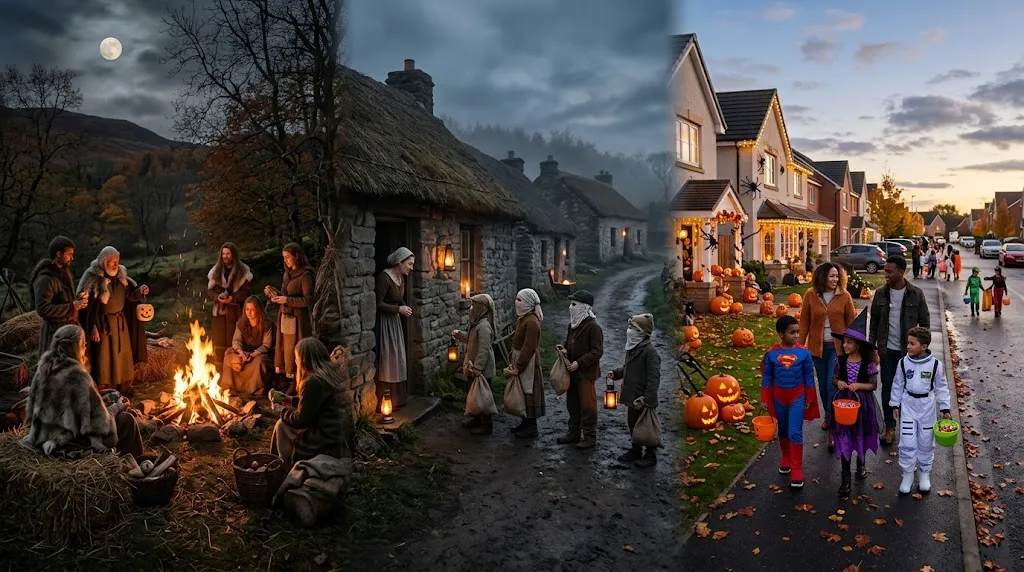
Halloween Before and Now: How Did Halloween Change?
Today’s Halloween history is very different from the seasonal rituals that existed more than a thousand years ago. Today, it is defined by distinctive costumes, carved pumpkins, sweets, haunted attractions, parties, movies, decorations, and children going door-to-door to ask for ‘treats.’ Yet, the story behind this familiar festival is far older and more complex.
Most dates trace a big part of Halloween’s roots back to Samhain, an ancient Celtic festival that marked the end of the harvest and the start of winter. Over the centuries, the Christian calendar, medieval customs, Irish and Scottish traditions, immigration, American pop culture, and commercial influences have all shaped the celebration. So modern Halloween is seen as a layered tradition, not a festival that just popped up fully formed all at once.
This is the story of Halloween before and now: where it began, what people once believed and did, how those customs changed, and why the Halloween we recognise in 2026 looks so different from its earliest forms.
Where Did Halloween Begin?
There is no single specific date set for the ‘origin’ or invention of Halloween. Its history is actually based on a long cultural evolution. The oldest major influence that is commonly discussed is Samhain, a Celtic seasonal festival associated with the transition from the harvest season to winter. Sources from the Library of Congress, History. The National Museum of Ireland all link Halloween’s ancestry to Samhain, while also showing that Christian and regional traditions later became part of the holiday.
Samhain was associated with the turn of the seasonal year. The National Museum of Ireland describes November 1 as the first day of winter in the traditional Irish calendar, with the main celebrations taking place on the evening before. That makes October 31 especially important to the story of Halloween.
It is also important not to imagine that ancient people celebrated Halloween exactly as people do today. Modern Halloween is a mixture of traditions that developed at different times and in different places.
Samhain: The Ancient Tradition Behind Halloween
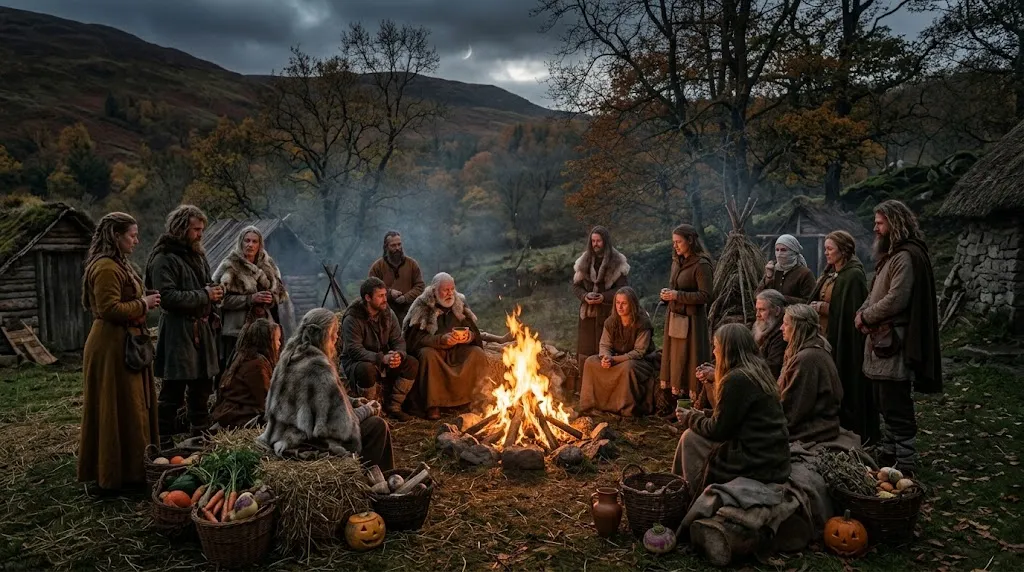
Samhain is generally described as a major Celtic festival that marks the end of the harvest and the beginning of winter. Traditionally, this period was associated with darkness, seasonal change, death, and the supernatural. People believed that during this period, the boundary between the living and the dead could weaken.
Bonfires were a significant part of certain Samhain traditions. Fire could serve both practical and symbolic roles, such as marking the seasonal festival and providing a focal point for communal gatherings. A historical overview by NASA notes the association of bonfires with Samhain, a festival celebrated in regions that now comprise parts of Ireland, Scotland, Wales, England, the Isle of Man. Northern France.
The idea of supernatural beings moving into the world also helps explain why disguises became important in later Halloween traditions. The Library of Congress notes that one traditional explanation for the costumes is that people used disguises to confuse or avoid spirits. However, the precise link between ancient Samhain practices and modern Halloween customs is a subject of debate; therefore, it is safer to describe them as influences and traditions that have evolved over time.
What Was Halloween Like Before Modern Costumes and Candy?
Before electricity, supermarkets, and plastic decorations, Halloween looked very different. On October nights in Ireland and Scotland, people wore masks and costumes to visit their neighbors, played games, shared food, built bonfires, and told stories about ghosts and spirits. The National Museum of Ireland shows that people used fruit and nuts to play games that predicted who would get married, painted protective symbols, and wore spooky homemade masks.
Halloween customs were often playful and fun rather than scary. People visited neighbours, played games, and wore costumes to pull friendly pranks. Children and teenagers dressed up and performed songs or tricks to get food and small treats in return. This playful tradition is how the phrase “trick or treat” eventually came to be.
How Did Halloween Get Its Name?
The name Halloween is derived from the Christian holiday. The day of November 1st was called All Saints’ Day or All Hallows’ Day in the Christian calendar. The night preceding the holiday was known as All Hallows’ Eve, which was contracted by people to Hallowe’en and eventually Halloween.
The Christian calendar did not completely eliminate older autumn traditions. Instead, new holidays combined with and reshaped earlier customs. The addition of All Souls’ Day on November 2nd made this time of year even more strongly connected to remembering loved ones who had died.
This is why Halloween’s history cannot be traced back to just one religion or culture. Today’s holiday is a mix of many influences over time, including old Celtic seasonal festivals, Christian holidays, European folklore, and modern American traditions.
Medieval Halloween: Guising and Souling
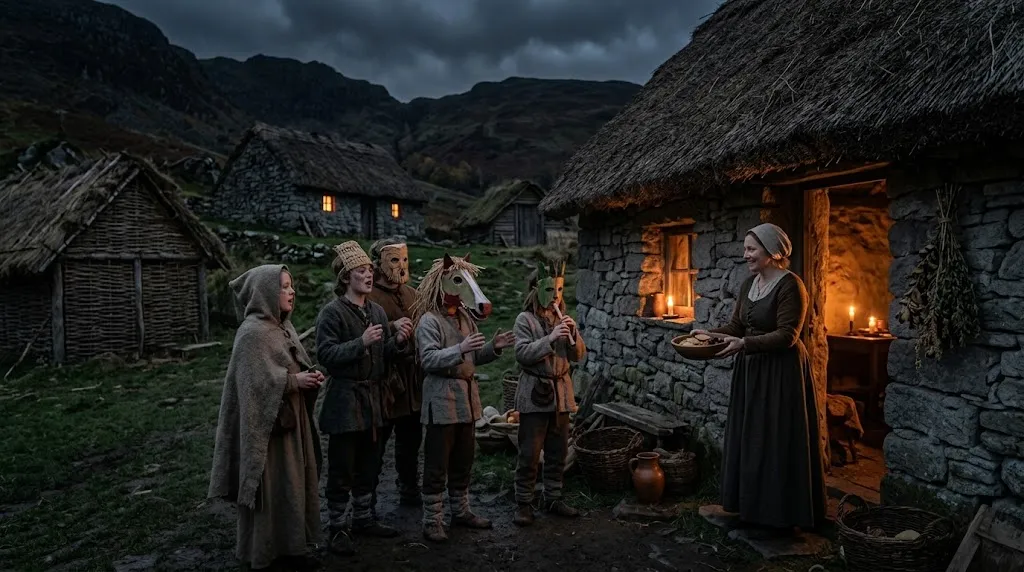
Long before American children carried plastic pumpkin buckets, European communities had customs involving visits from people in disguise. In Scotland and Ireland, ‘guising’ involved disguising oneself and visiting homes, often with songs, jokes, or performances in exchange for food or treats.
Another related tradition was ‘souling.’ In England, people could go from house to house around All Souls’ Day, receiving food in return for prayers for the dead. Historians still debate exactly how these practices connect to modern trick-or-treating, but they form part of the broader history of going door to door for an offering.
The Library of Congress presents several possible pathways for the modern tradition, including Samhain offerings, Scottish guising and Christian souling. That uncertainty is useful to remember: Halloween history is a story of overlapping traditions rather than a perfectly documented straight line.
Where Did Halloween Costumes Come From?
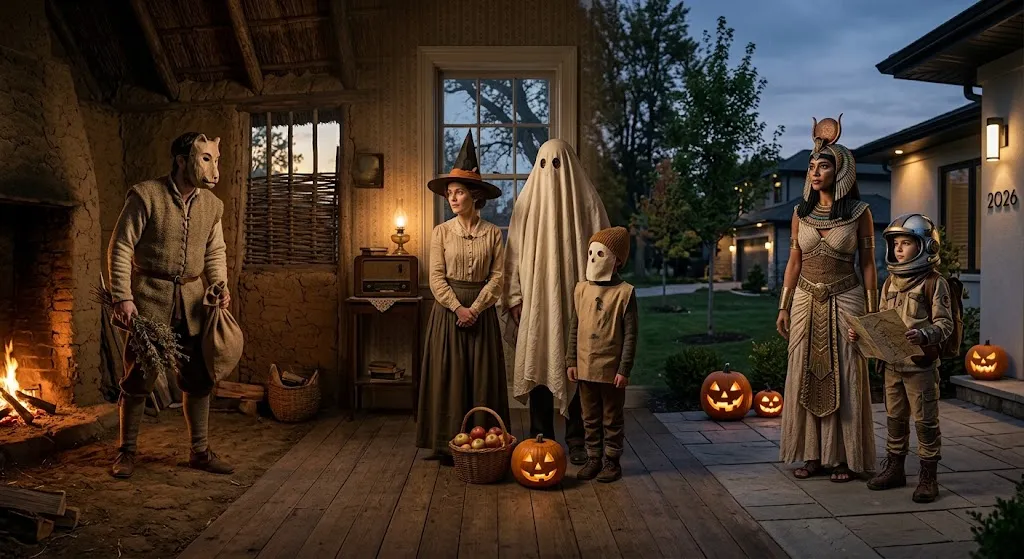
Costumes are among the clearest examples of an old idea surviving in a completely new form. Earlier traditions included disguises and masks connected with spirits, protection, and seasonal folklore. Over time, costumes became less about confusing supernatural beings and more about entertainment.
By the modern era, the costume could represent almost anything: ghosts, witches, monsters, historical figures, fictional characters, celebrities, or humorous ideas. In other words, the basic idea of changing appearance remained, but its purpose changed dramatically.
Today, costumes are also part of social media culture, school events, workplace parties, neighborhood celebrations, and themed photography. The ancient disguise has become a major form of creative self-expression.
Modern Halloween Costume Picks
1.Adult Halloween costumes
Men’s Halloween Skeleton Costume – Bold & Fun Hooded Jumpsuit
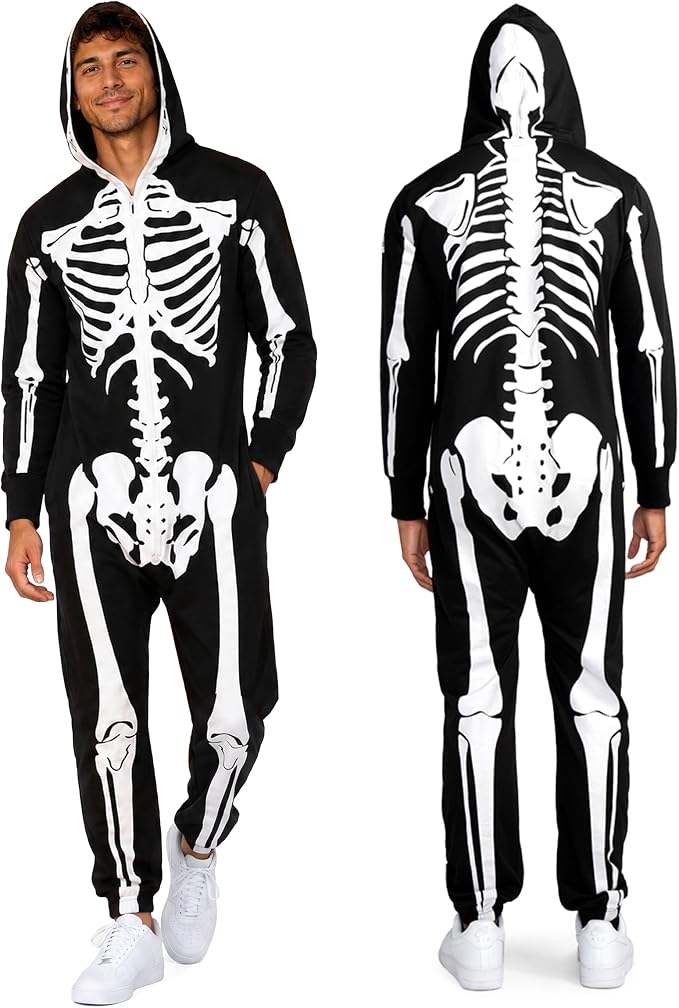
Shop the men’s Halloween skeleton costume with a full bone print, hood, pockets, and easy one-piece design for parties, cosplay, and Halloween events.
Women’s Skeleton Bodysuit Costume – Stunning & Confident Halloween Look

Stand out this Halloween in a stunning women’s skeleton bodysuit costume with stretch material, front and back bone print, and a flattering one-piece design.
2.Kids Halloween costumes
Kids Ninja Costume Set – Epic & Exciting Halloween Dress-Up

Make Halloween and dress-up parties more exciting with this kids ninja costume set featuring ninja-inspired accessories for boys and toddlers.
Kids NFL Football Costume – Authentic & Exciting Uniform Set

Get kids ready for Halloween, game day, or dress-up with an NFL football costume featuring a jersey, pants, helmet, chin strap, and iron-on numbers.
3.Halloween masks
LED Light Up Mask – Amazing & Interactive Gesture-Sensing Costume

Make Halloween and cosplay more exciting with an LED light up mask featuring gesture sensing, 50 display patterns, RGB lighting, and an adjustable fit.
Plague Doctor Mask – Striking & Mysterious Steampunk Halloween Costume

Create a striking Halloween or cosplay look with this latex plague doctor mask featuring a long bird-like beak, adjustable strap, ventilation holes, and steampunk styling.
4.Costume accessories
Vampire Teeth Grillz – Bold & Stylish 18K Gold-Plated Fangs

Complete a Halloween, cosplay, or hip-hop look with vampire teeth grillz featuring 18K gold-plated styling, iced-out CZ details, fangs, and molding bars.
Men’s Mullet Wig – Retro & Stylish 80s Costume Accessory

Bring back the 80s with this light brown men’s mullet wig made from heat-resistant synthetic fiber, featuring a pre-styled look and adjustable breathable cap.
The Story Behind the Jack-o’-Lantern
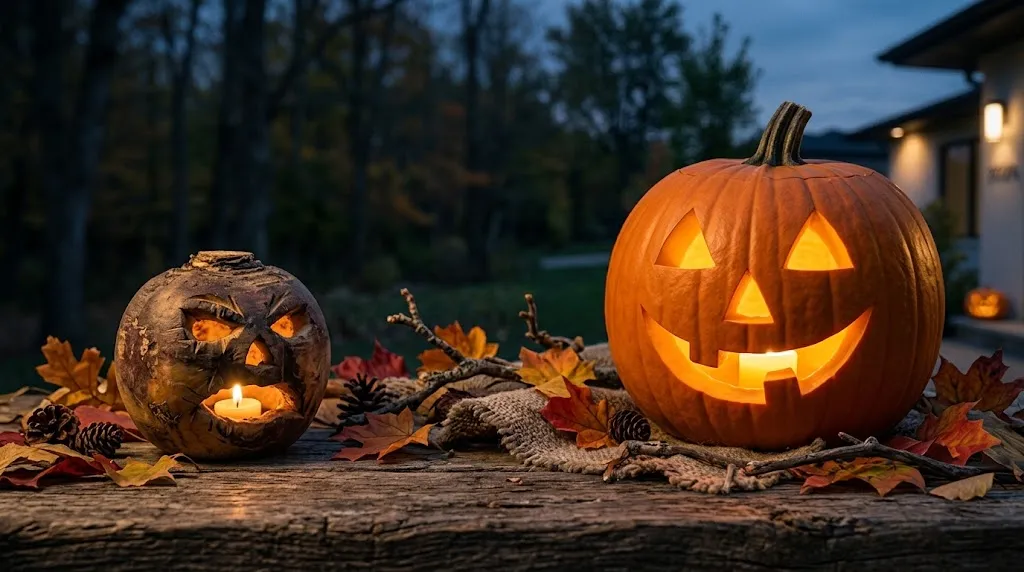
The glowing carved pumpkin is one of Halloween’s most recognizable symbols, but pumpkins were not the original material used for Halloween lanterns in Ireland. The Library of Congress and the National Museum of Ireland both document traditions involving carved turnips.
The jack-o’-lantern tradition is also connected with the Irish legend of Stingy Jack, a story about a man who was said to trick the Devil and later wander after death with a burning ember inside a carved vegetable. The legend helped give meaning to the frightening lantern, although the precise history of the custom includes folklore and regional tradition.
When Irish immigrants brought Halloween customs to North America, pumpkins offered a larger and easier-to-carve alternative to turnips. Over time, the pumpkin became the dominant Halloween lantern, especially in the United States.
That change is a perfect example of how Halloween evolved: an old idea stayed recognizable while the material and visual form changed.
Pumpkin Carving Essentials
Pumpkin carving has evolved into one of the most popular Halloween activities for families and creative decorators. Modern carving kits, tools and lighting accessories can make it easier to turn an ordinary pumpkin into a traditional jack-o’-lantern or a more detailed seasonal display.
1.Pumpkin carving kits
Pumpkin Carving Kit – Creative & Festive Halloween Sculpting Set

Create detailed Jack-O-Lanterns with this pumpkin carving kit featuring stainless steel tools, double-sided sculpting tools, saws, a scoop, drill, and carrying case.
Halloween Pumpkin Carving Kit – Creative & Fun 7-Piece Set

Create festive Jack-O-Lanterns with a 7-piece Halloween pumpkin carving kit featuring stainless steel tools, 12 stencils, and a convenient storage bag.
2.Pumpkin stencils
Halloween Pumpkin Decorating Stickers – Creative & Fun Craft Kit

Pumpkin Carving Kit – Premium & Creative Halloween Sculpting Set

Create detailed Jack-O-Lanterns with the Shuttle Art pumpkin carving kit featuring 15 stainless steel tools, 10 stencils, and a convenient carrying case.
3.LED pumpkin lights
Halloween Pumpkin Lights – Spooky & Convenient LED Jack-O-Lantern Decor

Create a spooky Halloween glow with these orange LED pumpkin lights featuring remote control, flicker and steady modes, brightness adjustment, and timer settings.
Solar Halloween Lights – Spooky & Magical Purple Outdoor Decor

Create a spooky outdoor display with 400 LED purple solar Halloween lights featuring 8 modes, memory function, automatic switching, and IP44 weather resistance.
Why Do We Carve Pumpkins Today?
Modern pumpkin carving is usually a family or social activity rather than a protective ritual. People choose pumpkins, cut faces or elaborate designs, place lights inside, and display them on porches, steps, and windows.
The designs have also expanded. Traditional scary faces now compete with cats, ghosts, movie characters, names, patterns, and highly detailed carvings. LED lights have made indoor and outdoor displays easier and safer than open flames.
The modern jack-o’-lantern therefore combines old symbolism with contemporary decoration, creativity and entertainment.
Where Did Trick-or-Treating Come From?
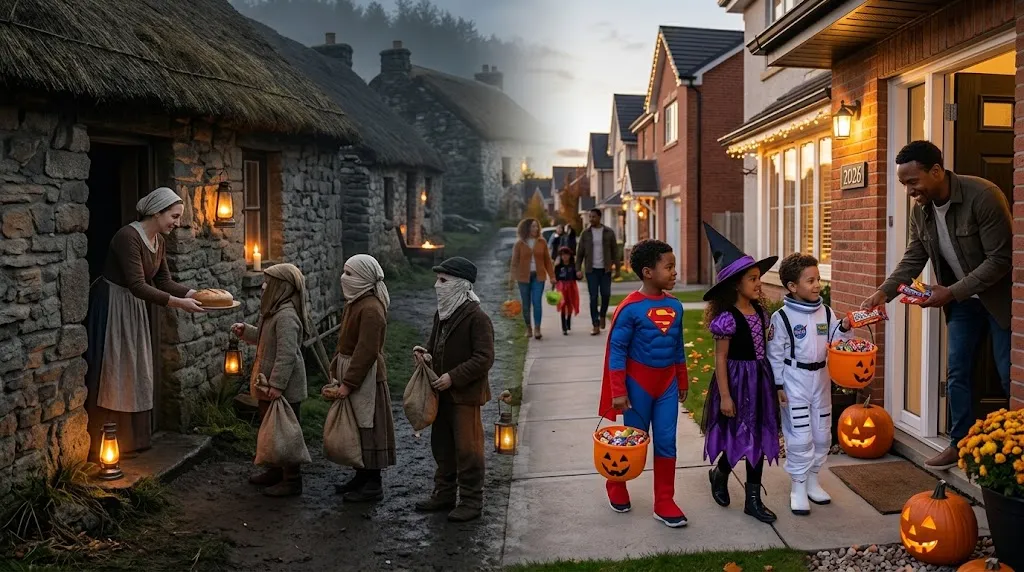
Trick-or-treating has one of the most debated histories in the Halloween story. The basic idea of visiting homes for food or gifts has several possible ancestors. Samhain traditions involving offerings, medieval souling, and Scottish guising are all discussed as influences.
In Scotland and Ireland, guisers could visit homes in disguise and perform for treats. In England, soulers could receive food in exchange for prayers. In the United States, these older practices eventually mixed with local Halloween customs.
The phrase ‘trick or treat’ itself is relatively modern. Smithsonian research notes that the term began appearing in the United States in the 1920s, while the practice became much more widespread after World War II. The growth of suburbs, mass-produced candy, and organized community celebrations helped make door-to-door trick-or-treating a mainstream children’s tradition.
Trick-or-Treating Essentials
Modern trick-or-treating has turned an old door-to-door tradition into a familiar Halloween activity for children and families. Treat bags, themed buckets and candy containers add a practical and festive touch while keeping the tradition fun for today’s celebrations.
1.Halloween treat bags
4×6 Self Sealing Cellophane Bags – Premium Crystal-Clear 200 Pack

Shop 200 clear 4×6 self sealing cellophane bags for cookies, candy, treats, party favors and crafts with an easy adhesive closure.
7×13 Cellophane Treat Bags – Premium Bright 200-Pack Clear Gift Bags

Get 200 clear 7×13 cellophane treat bags with twist ties for cookies, candy, baked goods, party favors, gifts, crafts and celebrations.
Trick-or-treat buckets
1.Halloween Pumpkin Candy Bucket – Classic Cheerful Jack O Lantern Pail

Bring Halloween fun to trick-or-treating with this orange Jack O Lantern candy bucket, featuring a lightweight pumpkin design and easy-carry handle.
Halloween Trick or Treat Bags with LED Lights – Magical 3-Pack Glow

Light up Halloween night with this 3-pack of reusable trick or treat bags featuring built-in LED lights, handles and festive designs for kids.
Halloween Comes to America
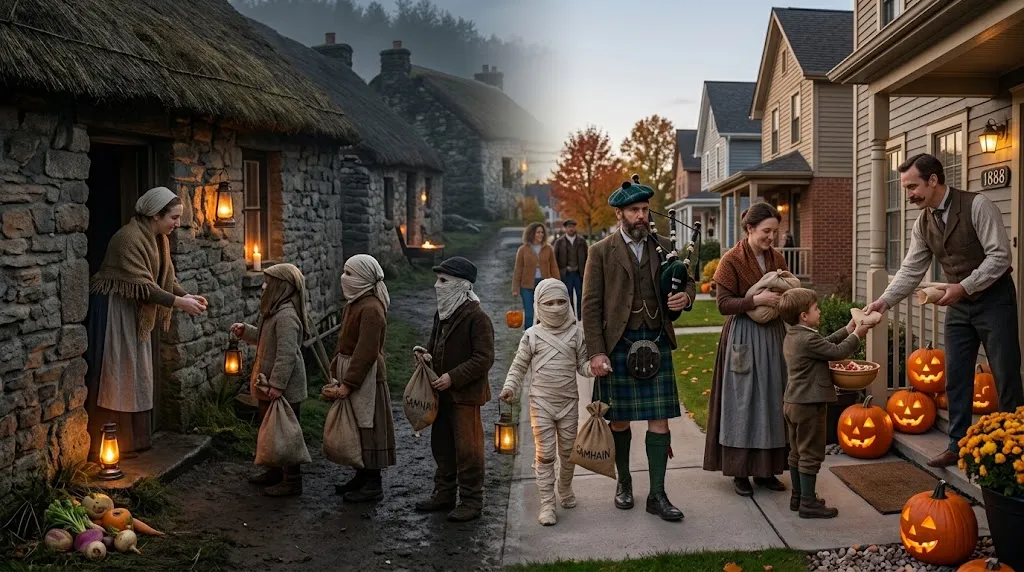
Halloween developed differently in North America because immigrants brought traditions from Europe and adapted them to a new social environment. Irish and Scottish immigration in the nineteenth century played an important role in spreading Halloween customs in the United States.
American Halloween gradually became more community-oriented and entertainment-focused. Costumes, parties, parades, pranks, decorations, and children’s activities all became part of the holiday.
The transformation was not always peaceful or harmless. In parts of the United States, Halloween became associated with increasingly destructive pranks. Smithsonian reporting on Halloween history describes a period when mischief could escalate into property damage and dangerous behavior. Communities eventually worked to redirect the holiday toward safer celebrations, particularly for children.
From Tricks to Treats
One of the biggest changes in Halloween history was the shift from uncontrolled pranks toward organized trick-or-treating. During the early twentieth century, some American communities struggled with Halloween vandalism. By the middle of the century, adults, schools, businesses, and media helped promote a more predictable version of the celebration.
Children could dress up, visit homes, say ‘trick or treat,’ and receive something in return. The tradition turned Halloween from a potentially disruptive night into a structured community event.
This change also helped candy become central to the holiday. Earlier Halloween treats could include fruit, nuts, homemade food, coins, and toys. By the 1950s, candy companies increasingly marketed individually wrapped sweets for Halloween, and by the 1970s factory-made candy had become dominant in many American communities.
When Did Halloween Become a Commercial Holiday?
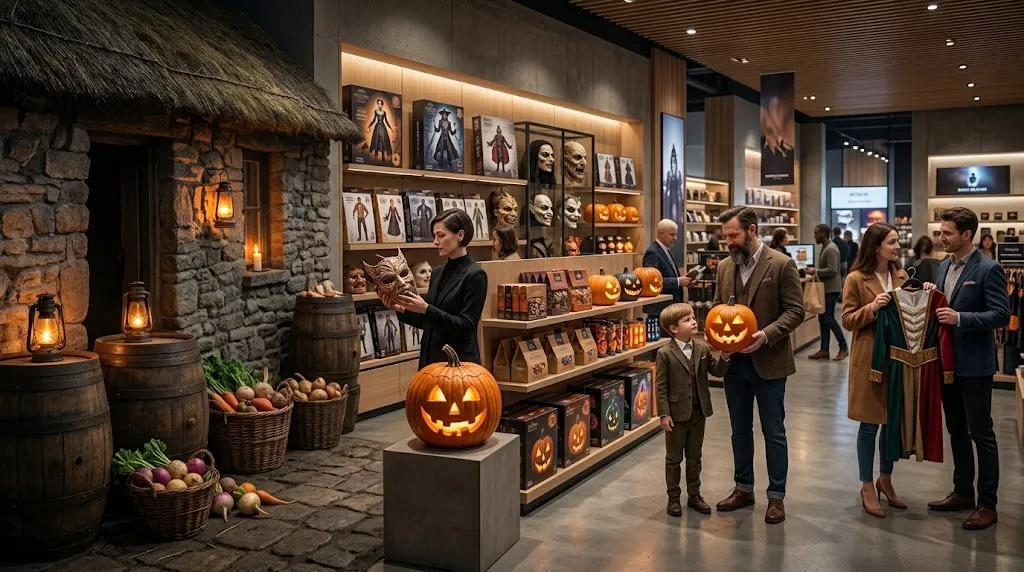
Halloween was commercial long before the internet, but modern retail transformed its scale. Costumes moved from homemade disguises toward store-bought outfits. Candy became standardized and individually packaged. Decorations became mass-produced. Greeting cards, movies, television specials, and themed attractions added new layers to the celebration.
The Library of Congress describes twenty-first-century Halloween as a secular and highly commercial holiday. That does not mean the older traditions disappeared. Instead, they became ingredients in a much larger entertainment and consumer culture.
Today, a Halloween celebration can include costumes, candy, home décor, pumpkin carving, haunted houses, school events, office parties, neighborhood gatherings, themed food, movies and social media content—all within the same holiday.
Halloween Before vs. Halloween Now
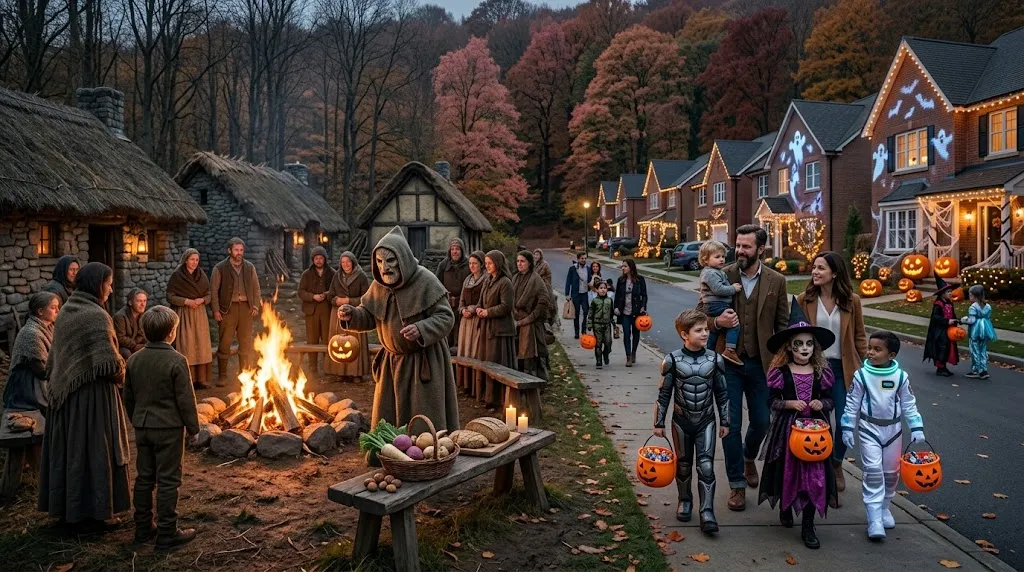
| Then | Transition | Now |
| Seasonal festival linked to harvest and winter | Christian calendar observances added new meanings | Secular autumn holiday celebrated for entertainment |
| Bonfires and communal gatherings | Candles and protective customs continued in altered forms | LED lights, outdoor displays and decorated homes |
| Masks and disguises | Guising and theatrical customs spread | Store-bought, handmade and pop-culture costumes |
| Turnip lanterns | Irish customs traveled to North America | Carved pumpkins and illuminated decorations |
| Food, nuts, fruit and homemade treats | Door-to-door customs evolved | Individually wrapped candy and themed treats |
| Fortune-telling, folklore and spirit stories | Folklore mixed with Christian and regional traditions | Horror movies, haunted attractions and online storytelling |
| Local village or community customs | Immigration and urbanization spread the holiday | Large-scale parties, retail displays and global pop culture |
How Halloween Is Celebrated in 2026
In 2026, Halloween is no longer limited to one type of celebration. In the United States and Canada, children may go trick-or-treating while adults attend costume parties, decorate homes, or visit haunted attractions. Schools and communities may organize parades and events. Families may carve pumpkins, watch horror films, bake seasonal foods, or create themed decorations.
The celebration has also become strongly visual. Social media encourages elaborate costumes, decorated houses, themed parties, and creative pumpkin designs. Retailers begin promoting Halloween products weeks or even months before October 31, turning the holiday into an extended seasonal shopping period.
At the same time, many modern celebrations still preserve recognizable pieces of the old tradition: dressing up, gathering after dark, telling frightening stories, lighting the night, sharing food, and treating October 31 as a night that feels different from ordinary days.
That continuity is what makes Halloween’s history so interesting. The meanings changed, the materials changed, and the scale changed—but the basic human desire to gather, play with fear, disguise ourselves, and mark the changing season remained.
Halloween Around the World Today
Halloween is now recognized far beyond the places where its historical traditions developed. The exact style of celebration varies widely. Some countries have adopted costumes and parties, while others combine Halloween with their own local traditions or treat it mainly as a commercial and entertainment event.
The Library of Congress notes that Halloween is now celebrated worldwide and reflects the assimilation of different cultures. That global spread is another major difference between Halloween then and Halloween now: an event once rooted in particular seasonal and religious traditions has become a recognizable international cultural phenomenon.
Why Does Halloween Still Feel So Different from Other Holidays?
Halloween has an unusual ability to combine opposites. It can be scary and funny, old-fashioned and modern, homemade and commercial, childish and adult-oriented. A carved pumpkin can sit beside a high-tech projection, while an ancient ghost story can inspire a modern movie or costume.
Its history also gives people freedom to reinterpret it. Some people focus on folklore and history. Others care most about costumes, candy, decorating, parties, horror entertainment, or family activities. There is no single modern Halloween experience.
That flexibility may be one reason the holiday has survived so many changes. Halloween has repeatedly absorbed new ideas without losing its recognizable core.
Frequently Asked Questions About Halloween History
When did Halloween start?
Halloween does not have one exact starting date. Its history is commonly traced in part to the ancient Celtic festival of Samhain, followed by centuries of Christian, European, and American cultural development.
Was Halloween originally called Samhain?
Samhain was an ancient Celtic seasonal festival and is often described as an important ancestor of Halloween. It is more accurate to say that Halloween developed partly from traditions associated with Samhain rather than saying the two were simply the same holiday.
Why is Halloween on October 31?
October 31 is the eve of November 1, a date associated with Samhain and later with All Saints’ Day. The evening became known as All Hallows’ Eve and eventually Halloween.
Why do people dress up on Halloween?
Disguise and masks have older roots in traditions associated with spirits and seasonal folklore. Modern costumes are mainly used for entertainment, creativity, parties, and self-expression.
Why do we carve pumpkins?
Halloween lantern traditions existed in Ireland using vegetables such as turnips. In North America, pumpkins became the preferred material because they were plentiful and easier to carve into large, expressive lanterns.
When did trick-or-treating become popular?
The exact path is complicated, but modern American trick-or-treating became increasingly popular in the twentieth century, especially after World War II. The growth of suburbs, packaged candy, and organized community celebrations helped establish it as a mainstream tradition.
Was Halloween always about candy?
No. Earlier door-to-door traditions could involve fruit, nuts, homemade food, money, or other gifts. Candy became much more central during the twentieth century as commercial Halloween expanded.
Final Thoughts: Halloween Before and Now
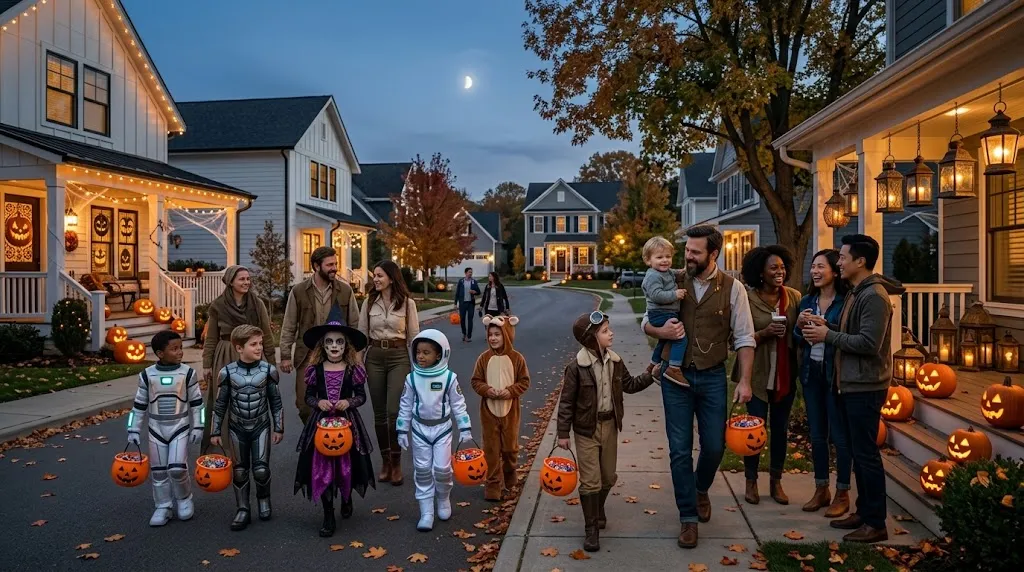
Halloween has traveled an extraordinary distance from its early seasonal roots. What began as a collection of traditions surrounding harvest, winter, spirits, community, and religious observance gradually became a modern holiday shaped by immigration, popular culture, retail, and entertainment.
The Halloween of 2026 would be almost unrecognizable to someone living in an early medieval Irish or Scottish community. Instead of turnip lanterns and traditional fortune-telling, people may see giant decorations, elaborate costumes, LED lights, themed parties, candy aisles, and horror entertainment. Yet the connection between past and present is still visible.
People still dress in disguise. They still light up the darkness. They still gather, share food, and tell stories designed to make us feel a little afraid. Halloween changed dramatically—but it never stopped changing. And that is the real story behind Halloween, then and now.